


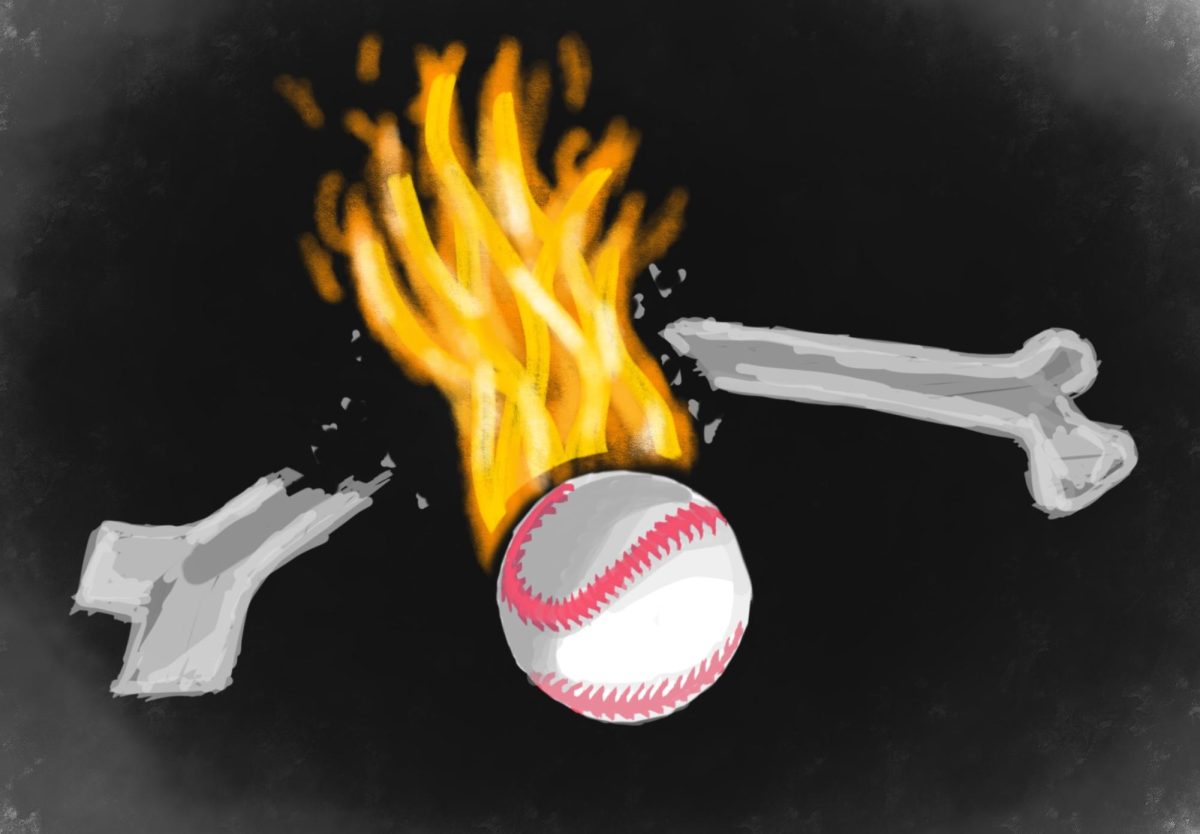








2,585. That’s how many player-days one MLB team, the Los Angeles Dodgers, lost to injuries in 2025 alone. As injuries continue to rise across the league, teams are losing star players for weeks, months and in some cases entire seasons. Though some injuries do come from certain athletes pushing their body to the absolute limit, most are caused by factors that are uncontrollable like field conditions and the physical strain of the game.
“As a former college pitcher, I know firsthand how difficult injuries can be. Many of the injuries I experienced came from throwing too much. As a baseball fan, I see the same thing happening today. Pitchers and position players put a lot of stress on their arms every time they take the mound, and during a 162-game season, that wear and tear can lead to brutal injuries,” science teacher Mr. Micciche said.
One major cause of the increase in injuries is the way modern athletes train and compete. Pitchers are throwing harder than ever before, often reaching speeds that older generations did not. Though this obviously improves performance, it significantly impacts many pitchers’ arms due to a lack of year-round rest. In MLB, there is a 162-game season, and frequent traveling for away games can make it difficult for players to fully recover between games. As a result, injuries such as UCL tears, which often require Tommy John surgery, have become increasingly common throughout the league.
“I think it’s terrible that injuries keep happening especially because of excessive throwing, and this comes from just everyone wanting to throw harder, but it’s just going to eventually catch up to them at the end of the day,” sophomore Jake Padinha said.
However, not all injuries come from players themselves. The places in which athletes play can also contribute to injuries. Many players have held opinions that their injuries actually come from the location of their games. For example, there has been debate on whether artificial turf fields are putting more stress on legs than grass fields. Weather conditions are also contributing factors in athlete wellbeing. Rain can cause slippery conditions and eroded equipment, leading to unintentional accidents or collisions. To further add, extreme heat or cold can affect a player’s condition during games. For example, if it is too hot out it can cause a player to undergo a temporary injury like a heat stroke. Even the most careful athletes cannot completely avoid these risks.
“I think injuries from things players can’t control are the worst. I remember in 2021 when Ronald Acuna was on the verge of a MVP season but he tore his ACL by trying to make a leaping catch in the outfield. Just felt like one of those worst moments of the game,” sophomore Aiden Norton said.
The rise in injuries has affected more than just players themselves. Teams who lose impact players during crucial stretches of the season like a playoff run are now often forced to put younger or less experienced players into larger roles. Though some may argue that this result does give new prospects more moments to shine, ultimately it hurts a team’s chance of making it to the playoffs. This impacts fans since they cannot even see their favorite players or teams in the playoffs.
“I think injuries have the number one spot for the worst parts of the games. As a Mets fan, we have seen brutal injuries over the past couple of years that have impacted playoff runs like Franscico Lindor or even starting pitcher Kodai Senga. When teams are losing their best players at the most important points of the season, it can completely change their chances of competing for a championship, and that doesn’t go only for baseball, but for the whole sports world,” said junior Jacob Varghese.