

















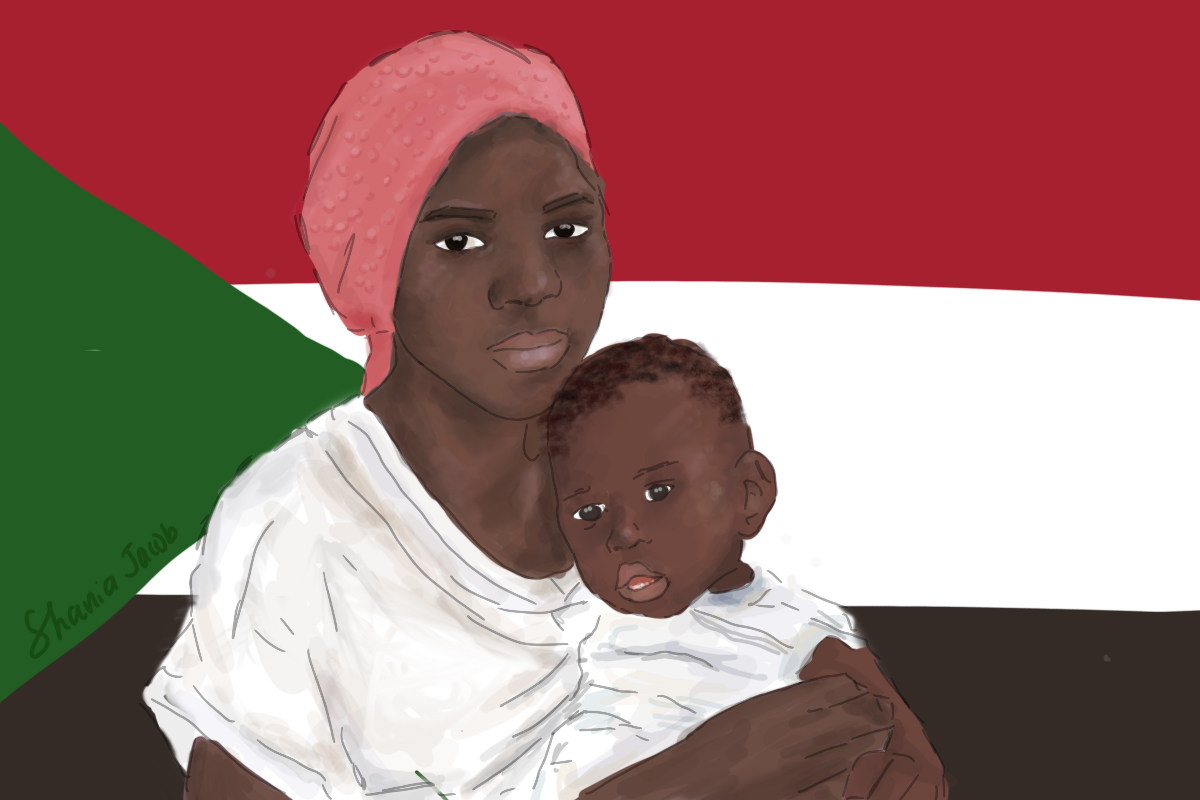
A power struggle between Sudan’s military and the Rapid Support Forces erupted into civil war on April 15, 2023, resulting in the deaths of approximately 150,000 people, displacement of millions, creating one of the world’s most severe humanitarian crises.
“I want more people to learn about this and spread awareness,” sophomore Esthefany Ramos Quintanilla said.
The Rapid Support Forces are a paramilitary group in Sudan that originally formed from militias involved in earlier conflicts. Over time, the RSF gained influence and control, which led to rising tensions with Sudan’s military government. Disagreements over power, leadership and control of the country eventually caused the conflict to escalate into violence.
Civilians have lost all their property and belongings as shootings resulted in destroyed buildings. Farmers are unable to grow food, which led to various markets shutting down, leaving small nutrition options. Many children are starved for days until they can find small portions of food to share with families and communities.
“I think if it isn’t resolved, things will likely get worse. More people might be displaced, the economy will suffer and the country may become even more unstable,” sophomore Zhixuan Wu said.
Organizations have been spreading awareness about this matter by releasing flyers and making posts on social media to show the conditions Sudanese people are facing. They have also been setting up fundraisers to raise money to donate to food services for Sudan. These actions disclose the Sudanese conflict.
“Learning about it has helped me get a better understanding of the issues going on,” eighth grader Vihaan Masireddy said.
Schools are beginning to address modern-day conflicts such as the Sudanese Conflict. Research labs are being formed, such as the Humanitarian Research Lab at Yale, which collects information about the civil war and conducts research on it. As these schools’ research sheds light on this matter, it shows greater value to the issue and introduces more perspectives to the conflict.
“Learning about Sudan helps students understand how conflicts, politics and history shape people’s lives. It also encourages empathy and global awareness. And it hopefully can help students appreciate the peace and stability we sometimes can take for granted,” social studies teacher Mr. Laugen said.