


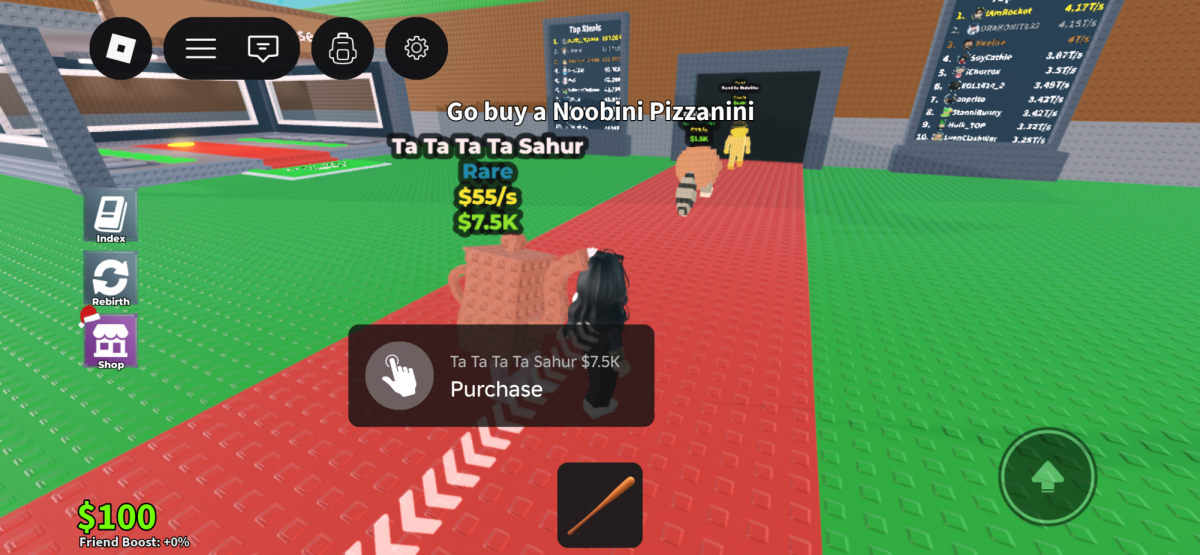



Many lawsuits are currently being filed against the popular online game Roblox, played by millions of young children and many students at NHP. This is due to Roblox’s alleged failure to protect its user base from online predators that use manipulation tactics to exploit young victims and conceal malicious intentions.
Across the player base, many Roblox users are reportedly exploiting the filtration system to send messages and create games targeted at unsuspecting users. In October, the state of Kentucky sued Roblox for allegedly allowing child predators to run rampant on its platform and exposing children to unsanctioned material, including simulators of conservative activist Charlie Kirk’s assassination. Additionally, Texas is the third state to sue Roblox, after Kentucky and Louisiana, on the grounds that the company has not sufficiently protected minors.
“Even though I like playing Roblox with my friends, we sometimes run into weird users who ask for our names or what school we go to,” sophomore Eaiden Joseph said.
The Roblox lawsuit reveals the dark side of the gaming industry, showing that games that appear family-friendly and have a high kids’ player base may not be as safe as they seem on the surface. This has caused parents to take more preventive measures when their children are on Roblox.
“I do allow them [my kids] to play Roblox, but they can only play games that I approve of, and they only have access to their iPads when I put the password in, so they can’t play Roblox when I’m not around,” math teacher Ms. Joseph said.
Since many students actively play Roblox when they have free time, the lawsuit sparks discussions about gaming ethics in a broader context. Other popular games like Grand Theft Auto may also expose children to inappropriate content, but these games are clearly rated M by ESRB standards. On the contrary, Roblox markets itself as a game for kids and allows game creators to moderate and rate their games, even though this can be highly biased.
“I’ve run into many games on Roblox that say they’re for people ages 5 and up, but they actually have violence and other stuff in them that’s not suitable for kids,” 8th grader Joseph Leckner said. “It’s scary, especially since I have a little sister on Roblox who is only seven.”
Another issue the platform faces is scamming and fraud. Robux, a virtual currency in the game that can be purchased with real money, is prized, and many users may convince unassuming kids to hand over their Robux, promising a virtual pet or item in a specific Roblox game that they never end up giving.
“I know Robux is really important in the game, and as a kid, I wanted it a lot, too. It’s sad how many people I’ve seen take advantage of this, and I couldn’t do anything about it because the kids wouldn’t listen to me,” commented sophomore Caleb Yu.
As a result, many parents may feel safer entirely prohibiting their kids from playing Roblox, while other parents may restrict their kids’ use of the app. The game continues to be played by countless users, but now they are more cautious than before.